History
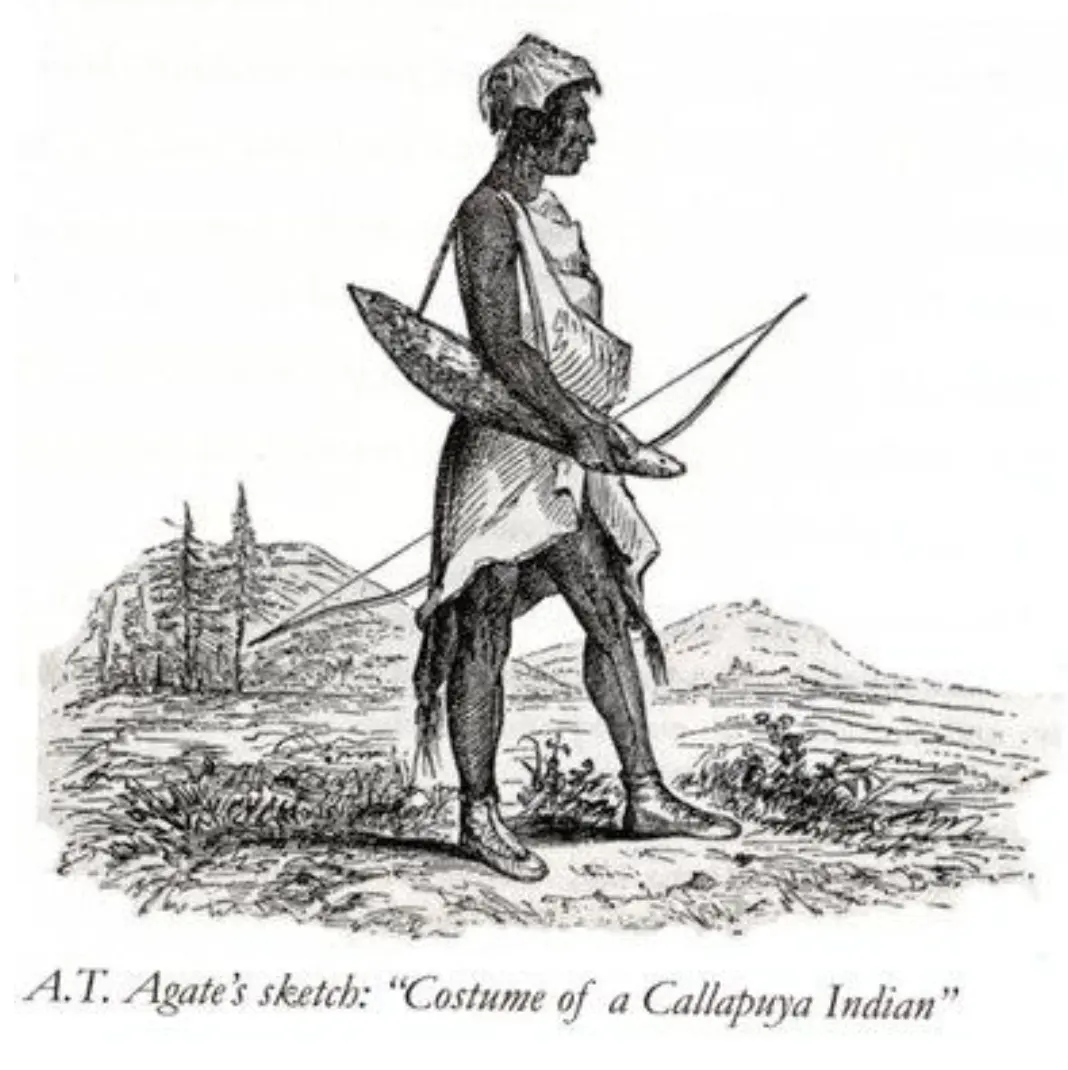
"Costume of a Callapuya Indian," 1841, by Alfred T. Agate Courtesy Oreg. Hist. Soc. Research Lib., OrHi 104921
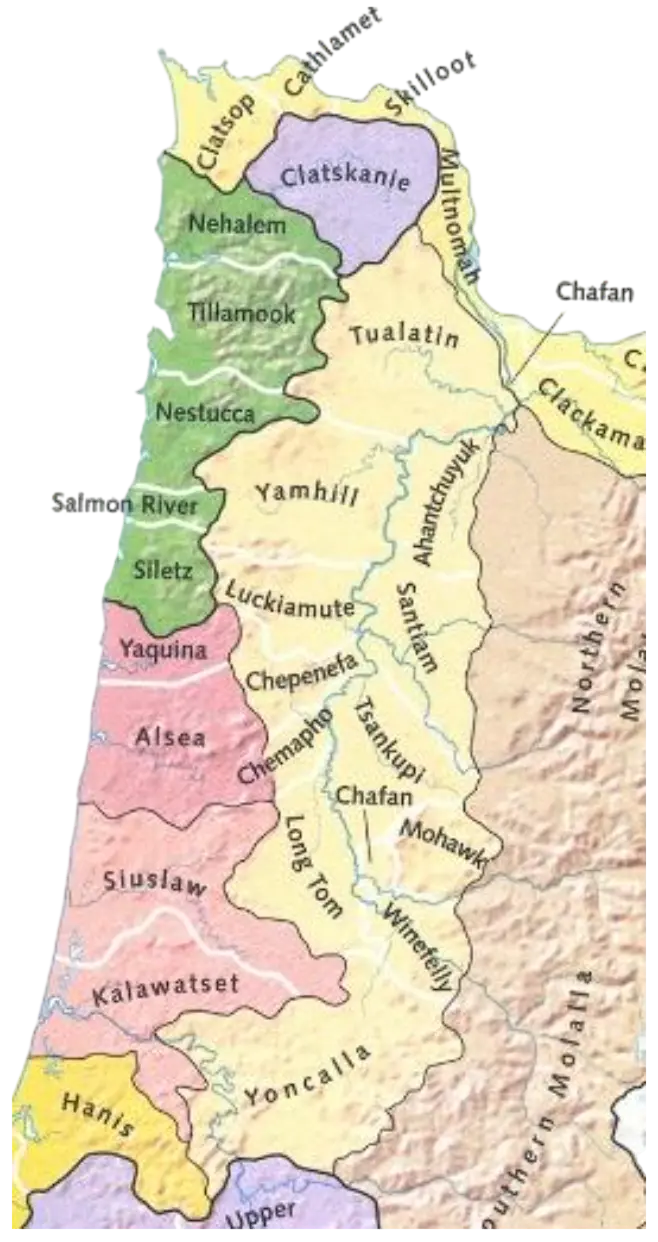
Map: Atlas of Oregon (2nd ed.) University of Oregon Press, 2001
Earliest Inhabitants: Time Immemorial-Present
The Kalapuya and Molalla are the earliest inhabitants of the area now known as Silver Falls State Park. They have called these lands home since time immemorial. Many of their descendants are members of the Confederated Tribes of Grand Ronde and continue to visit, enjoy, and connect with the Silver Falls today.
Indigenous people numbered about 15,000 in the Willamette Valley before European-American settlement, but populations began to decline with the introduction of foreign diseases, to which they had no immunity. By the early 1840s, the Indigenous population dropped to about 600, and newcomers were arriving in large numbers. By 1850, hundreds of settlers lived in and around the Willamette Valley before completely displacing all the Native people in Western Oregon when the government relocated them to reservations in 1854. (Source: Oregon State Parks - Silver Falls State Park)
Early languages include Northern Kalapuya (Tualatin-Yamhill), Central Kalapuya (Chenapinefu), and Southern Kalapuya (Yoncalla). See the map for more detail on the languages historically spoken throughout the region.
Chinuk Wawa, also known as Chinook Jargon, is a shared language that has long enabled communication among diverse Indigenous peoples of the Pacific Northwest and, later, European traders and settlers. It draws primarily from Chinookan languages, along with other Native languages, English, and French. Once at risk of disappearing, Chinuk Wawa is experiencing a resurgence and is actively taught and used by the Confederated Tribes of Grand Ronde. (Source: Confederated Tribes of Grand Ronde - Chinuk Wawa Language)
Silver Falls City: 1880s-1930s
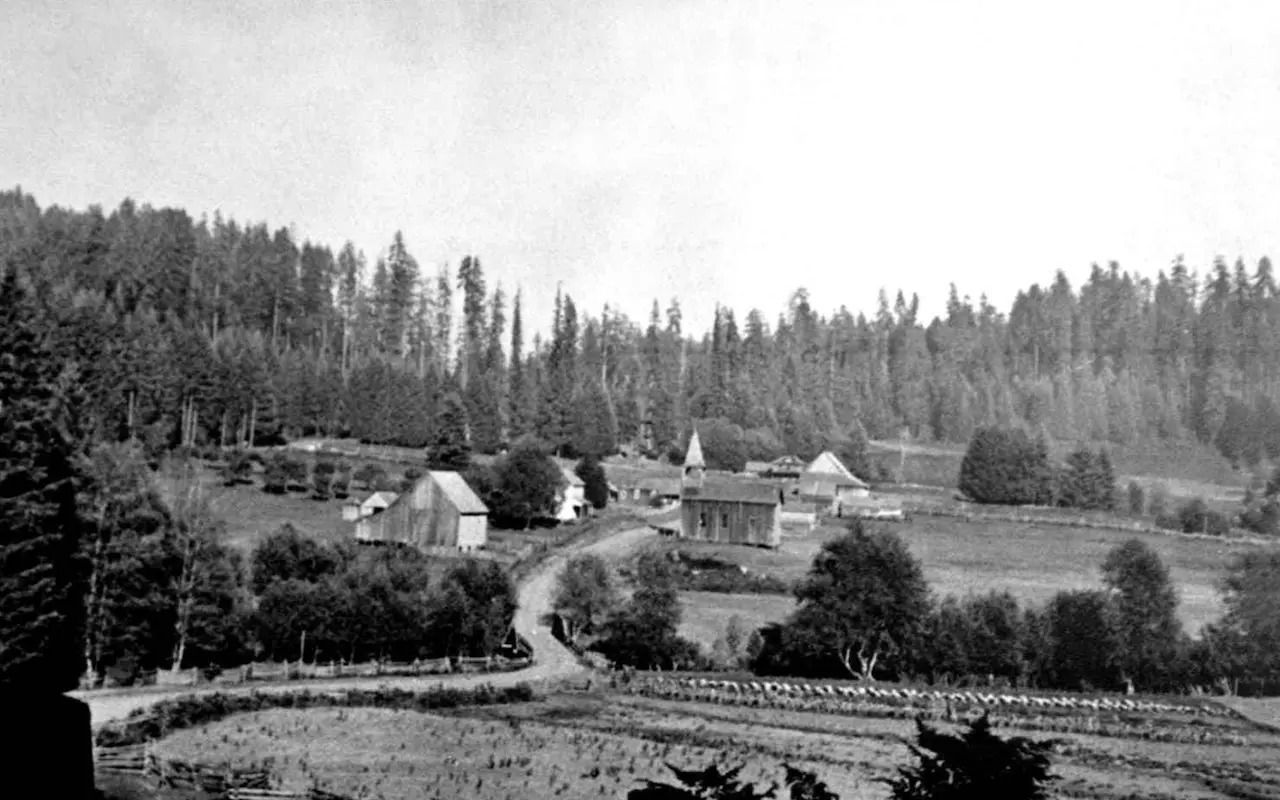
The first land homesteaded in Silver Falls was in 1883, next to South Falls. The next homestead comprised the area that includes South Falls Lodge, nearby buildings, and what is now park’s main parking lot. On this same land, the town of Silver Falls City was platted in 1888. Never more than several dozen families at a time resided in it. Still, it was the de facto capital of Silver Falls, an area with a peak of more than 200 residents, and it lasted for over 40 years. In its time, it had three general stores, an eight-room hotel, a church, a dance hall, a tavern, a granary, a blacksmith shop, houses with barns and other outbuildings, and several sawmills. A one-room school was located 1.5 miles south.
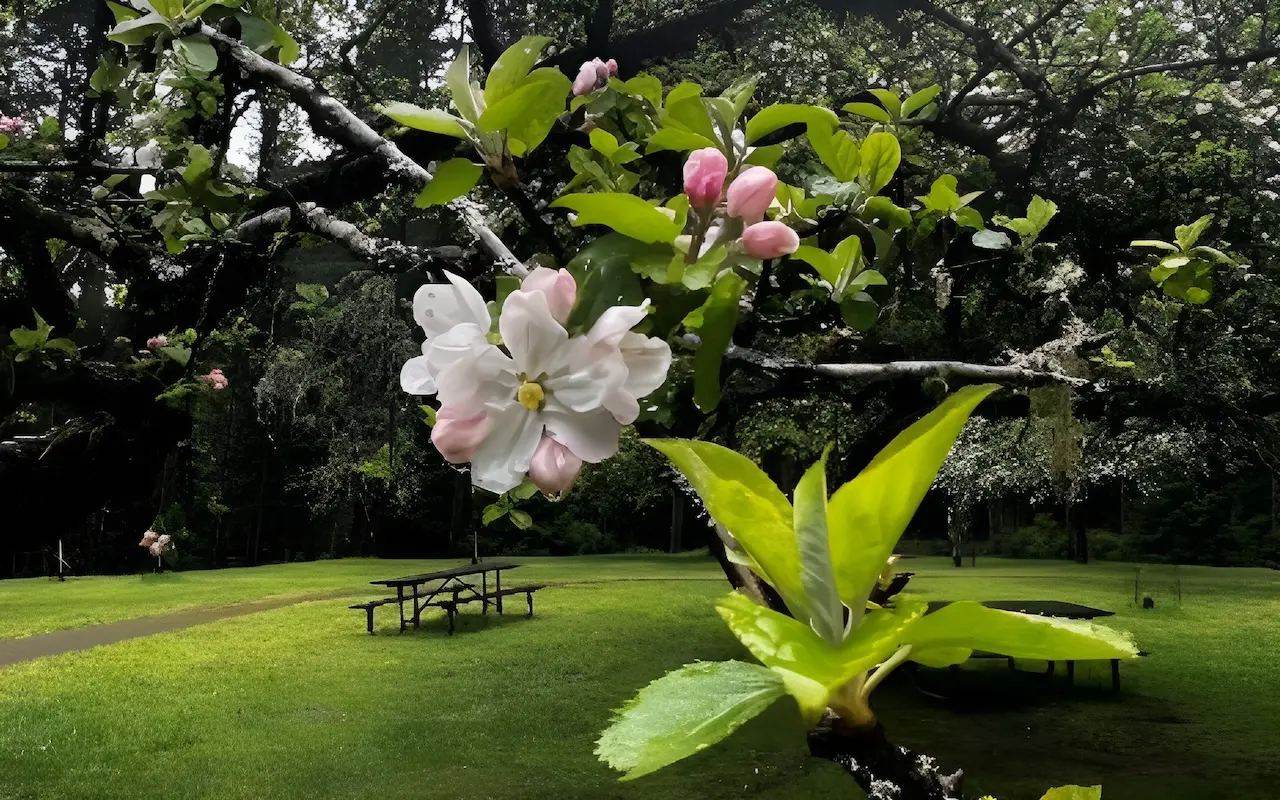
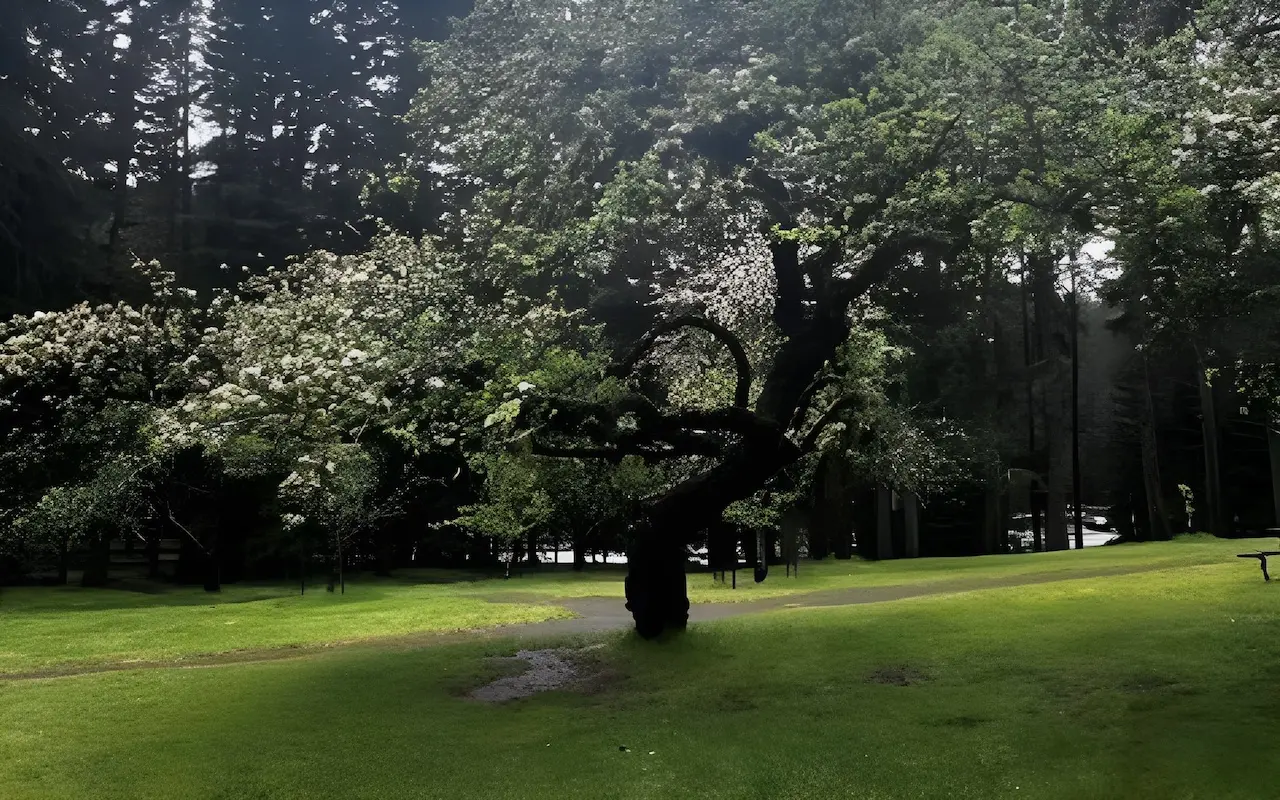
Remnants from Silver Falls City still exist in the park. The orchard near the entrance to South Falls Day Use was planted by homesteaders in the late 1800s. These apples and pears are heirloom varieties that produce smaller fruit than what is commonly grown today.
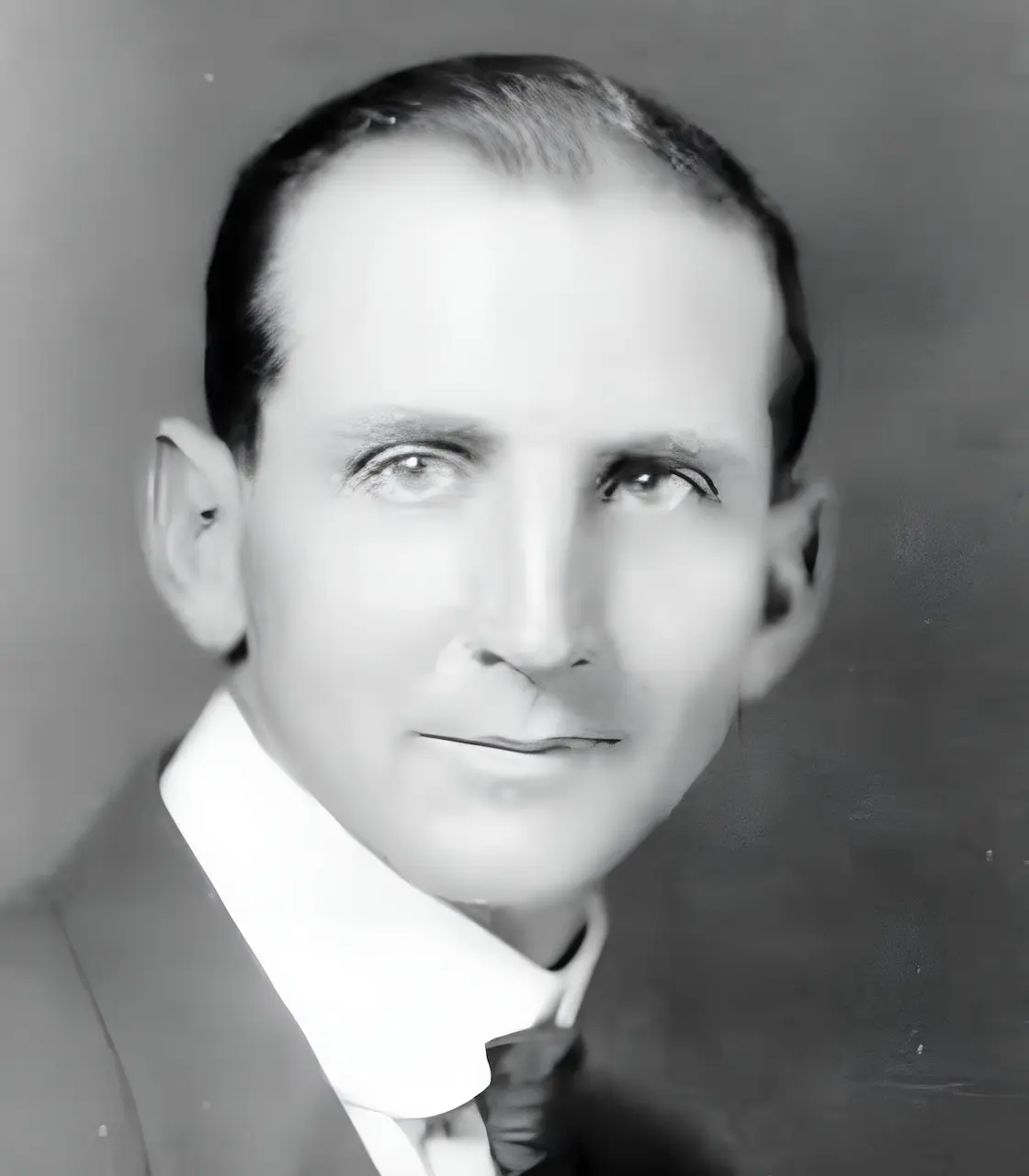
June Drake: Lived From 1880-1969
June Drake earned the title “The Father of Silver Falls State Park” by campaigning to get the waterfall area protected public land status. Drake was a professional photographer, which served his campaign efforts well. He used his photographs of the falls to persuade legislators, community organizations, and park commissions to protect the area from future logging. The National Park Service rejected the proposal, stating that the "thousands of stumps...from a distance look like so many dark headstones."
Drake's photographs were not enough to achieve his goal of protecting the area. Part of his campaign was to organize people to purchase or donate land. Drake even used his own money to purchase land and buy options.
Samuel Boardman, Oregon State Parks’ first superintendent, requested and was approved by the state parks commission to purchase the first land for the park on April 3, 1931. The next day, the state purchased 160 acres from Drake. The state then purchased the remaining buy options totaling 788.1 acres of land. The park was officially dedicated on July 23, 1933.
Drake was also a prominent figure in the city of Silverton. He was the Silverton fire department's chief for eight years. He served on the Silverton City Council and instigated new city systems for water and sewage. Overall, June Drake lost money on the land transactions, but when asked about his greatest achievement, he said Silver Falls State Park.
Information obtained from “The History of Silver Falls” by Andrew K. Nelson, published by Friends of Silver Falls State Park and available for purchase at the South Falls Nature Store and in our online collection here.
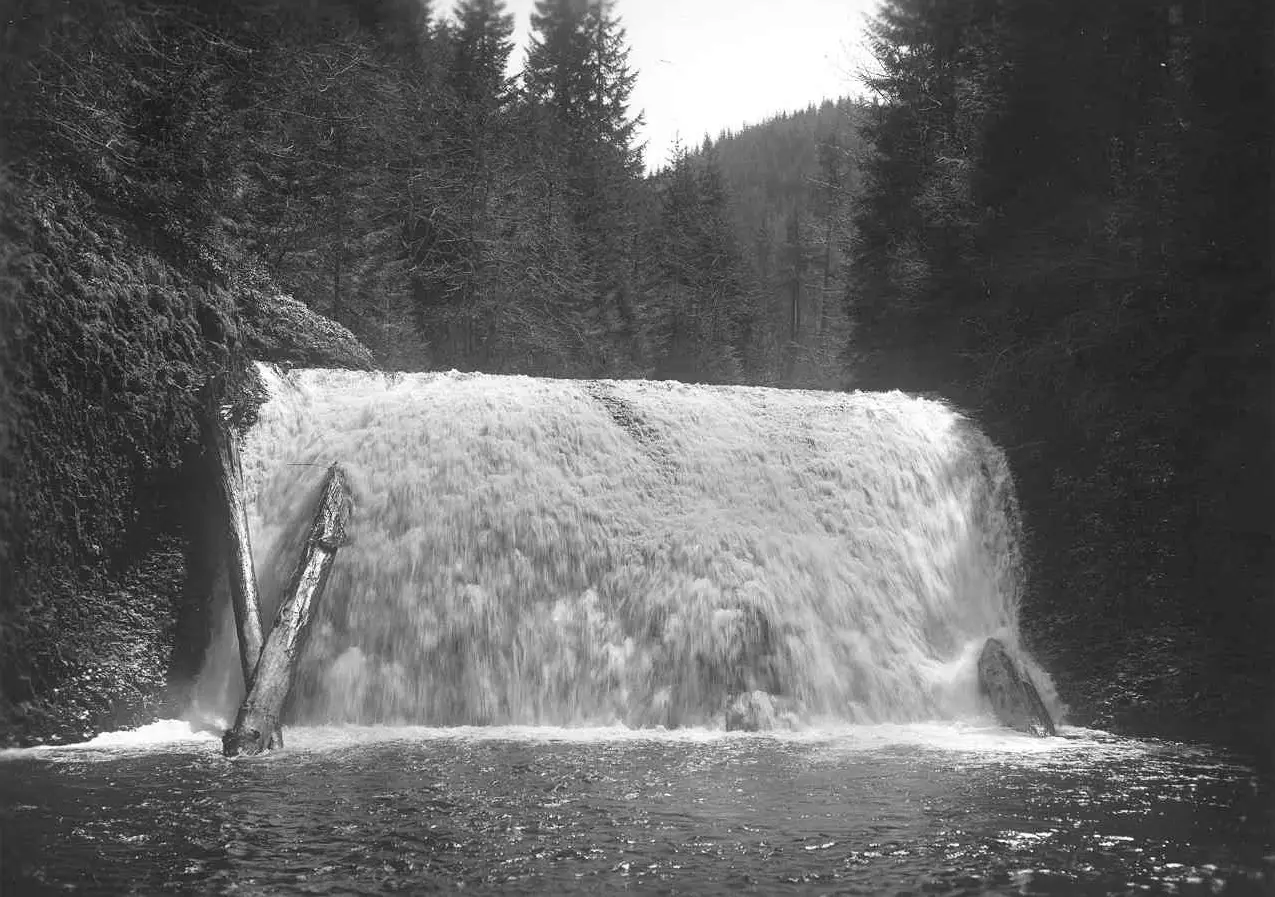
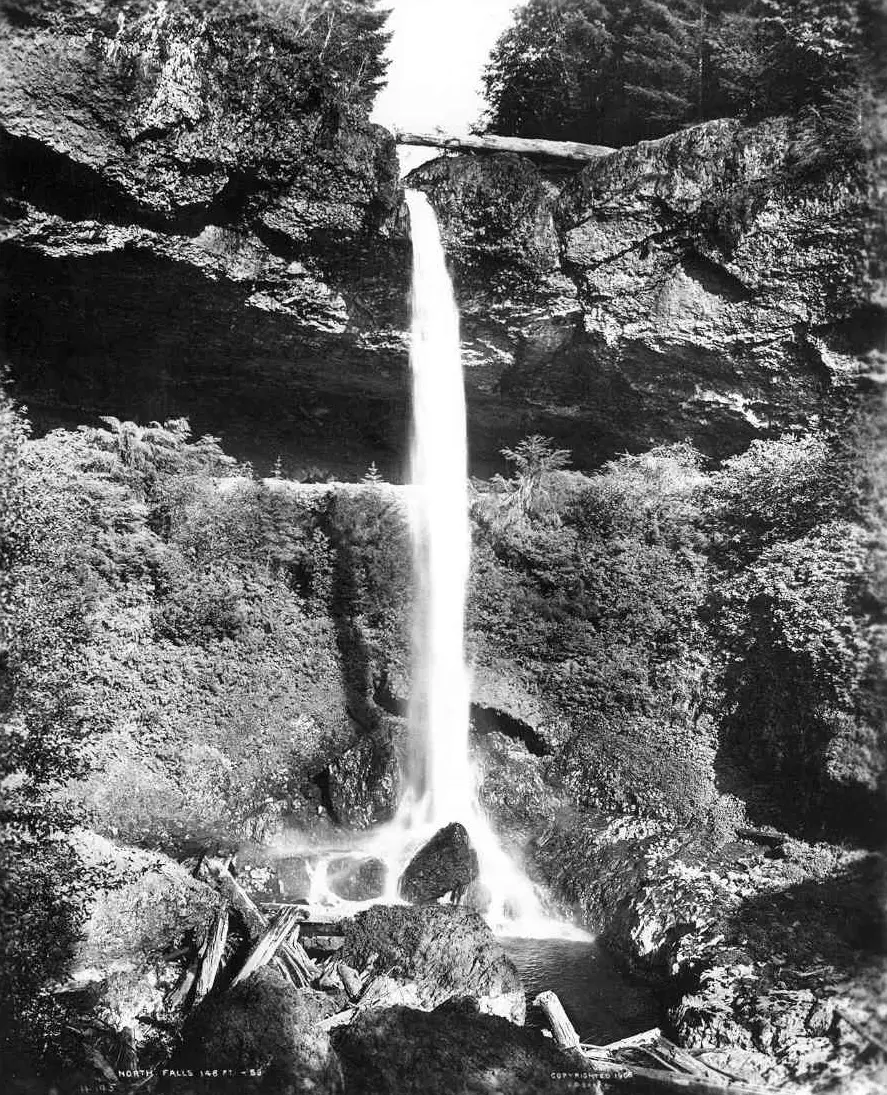
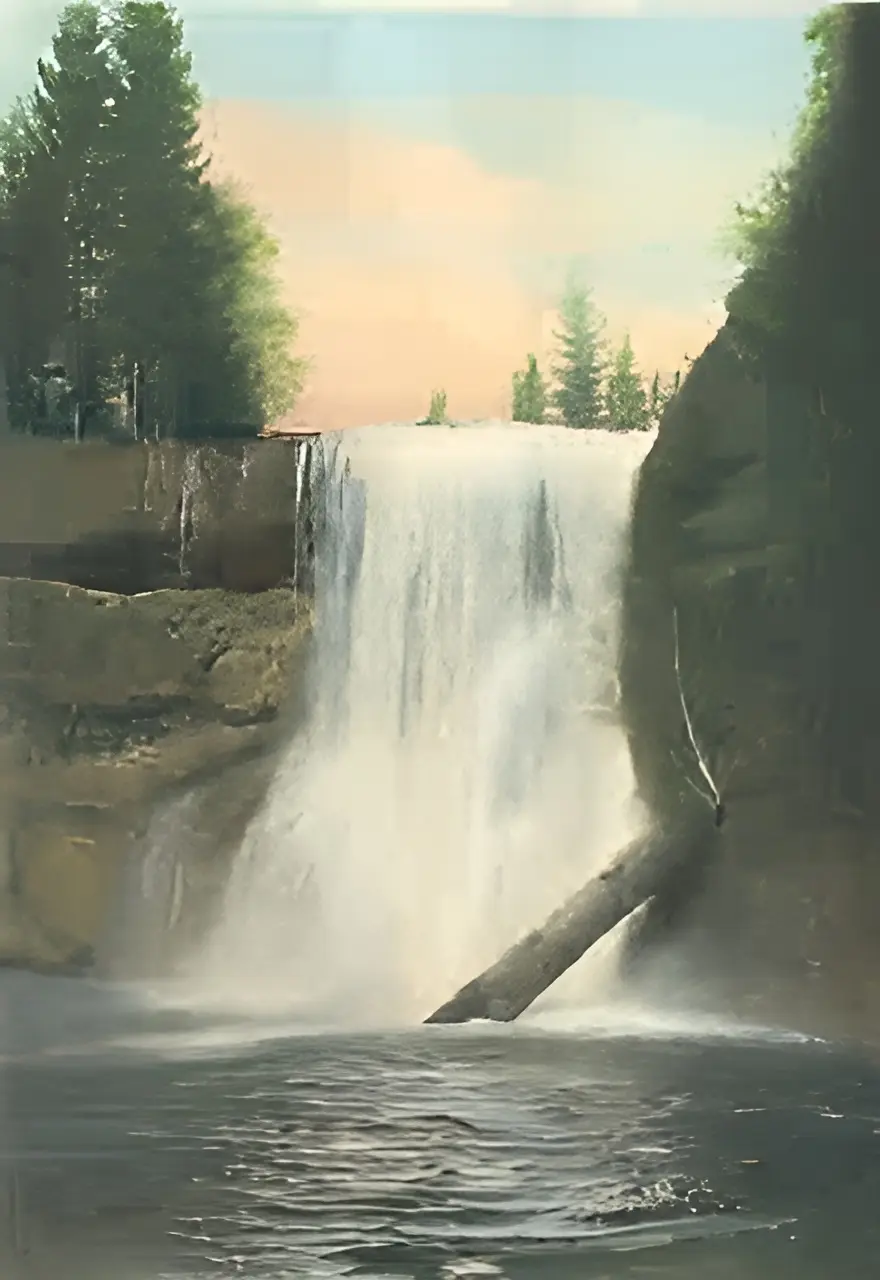
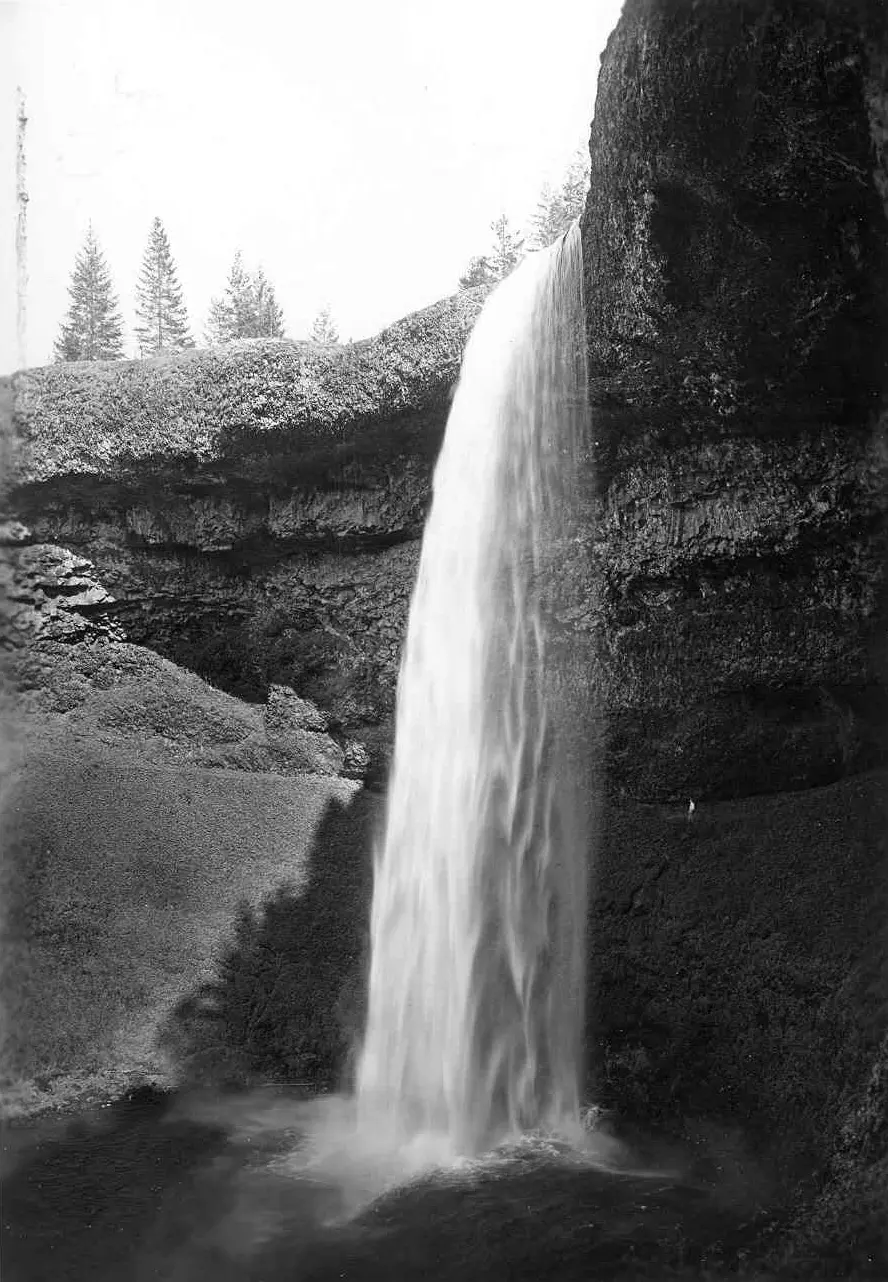
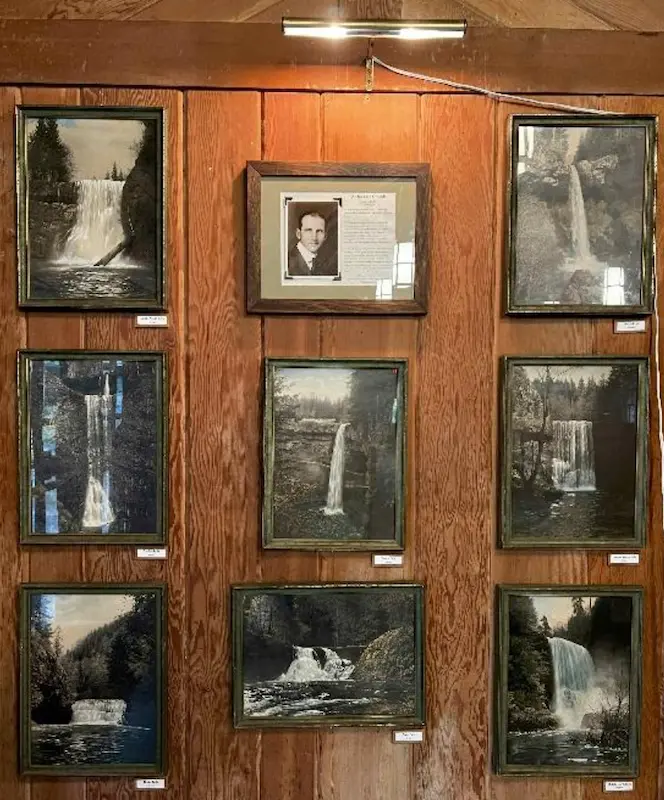
See June Drake's original photographs in the South Falls Lodge near the fireplace.
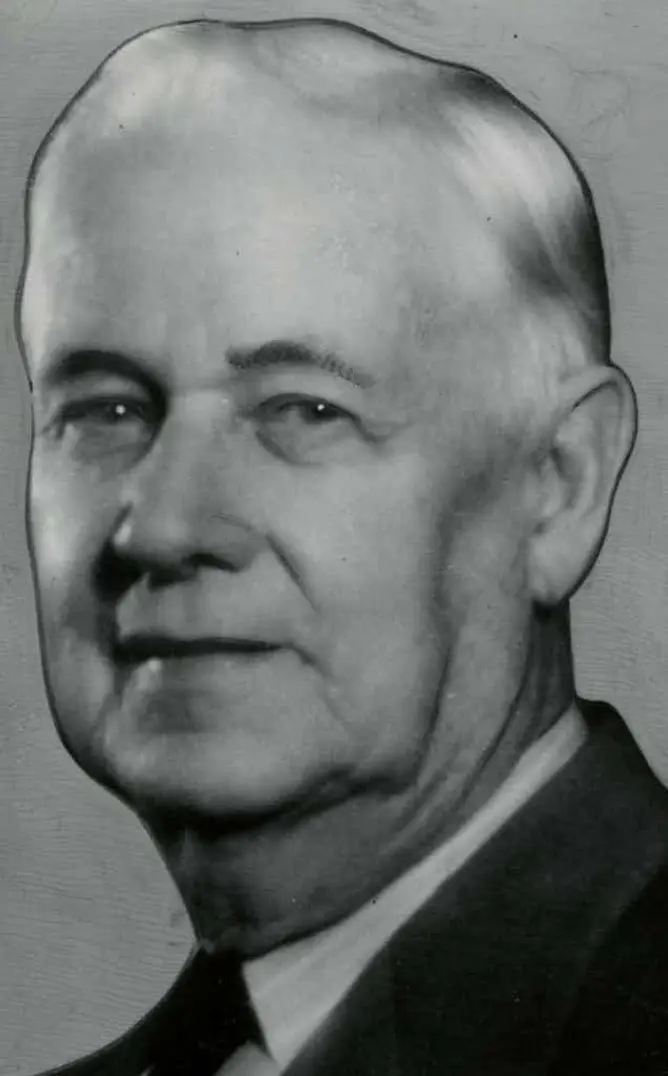
Samuel H. Boardman: Lived From 1874-1953
Sam Boardman was Oregon's first state park superintendent and known as the “Father of Oregon State Parks.” Silver Falls State Park was the first park to be added to the Oregon system under Boardman's tenure. Making the original land purchase on April 3, 1931, Boardman received help from June Drake. Drake had been campaigning for park status in the area and was a prominent community figure in Silverton who knew many of the landowners.
Silver Falls State Park was dedicated on July 23, 1933. In attendance were June Drake, an assortment of dignitaries and politicians, and a crowd Boardman estimated to be around 8,000.
By the end of Boardman's career, Silver Falls State Park had grown to 7,699.27 acres. Despite his setbacks and limited funding throughout his career, Boardman grew the total number of state parks from 46 to 181 and from 4,000 acres to 66,000.
Information obtained from “The History of Silver Falls” by Andrew K. Nelson, published by Friends of Silver Falls State Park and available for purchase at the South Falls Nature Store and in our online collection here.
Civilian Conservation Corps (CCC): 1933-1941
CCC in a Nutshell:
The Civilian Conservation Corps was one of President Franklin D. Roosevelt’s New Deal programs. The country was in dire straits during the Depression, and Roosevelt’s CCC (or “Tree Army” as it would later be nicknamed) offered unemployed young men the opportunity to build roads, bridges, National and State Parks, learn forestry, masonry, and carpentry skills, and earn money to send home to their families.
Created in 1933, camps were constructed across the nation. The program was a successful collaborative effort among four government cabinets:
- War: Administrative, housing, transport, discipline
- Labor: Selection of applicants
- Interior: National Park Service (NPS) planned and organized work
- Agriculture: Forest Service coordinated forestry/fire management
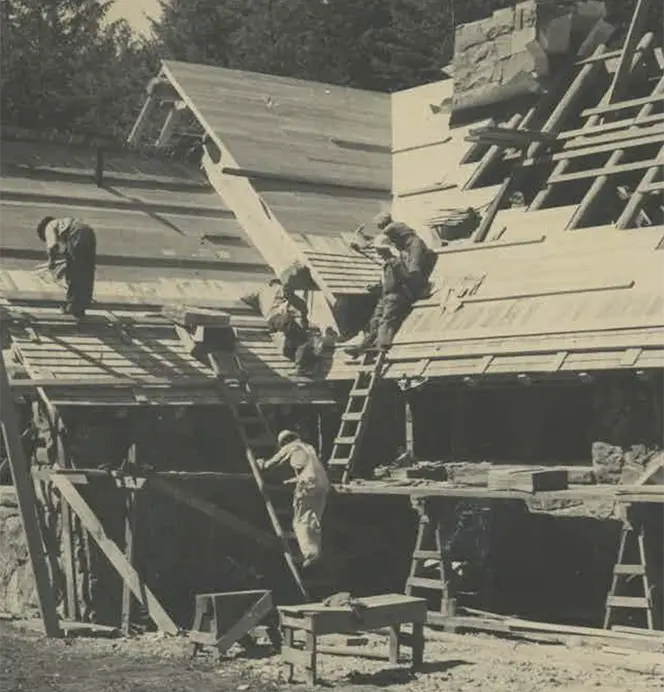
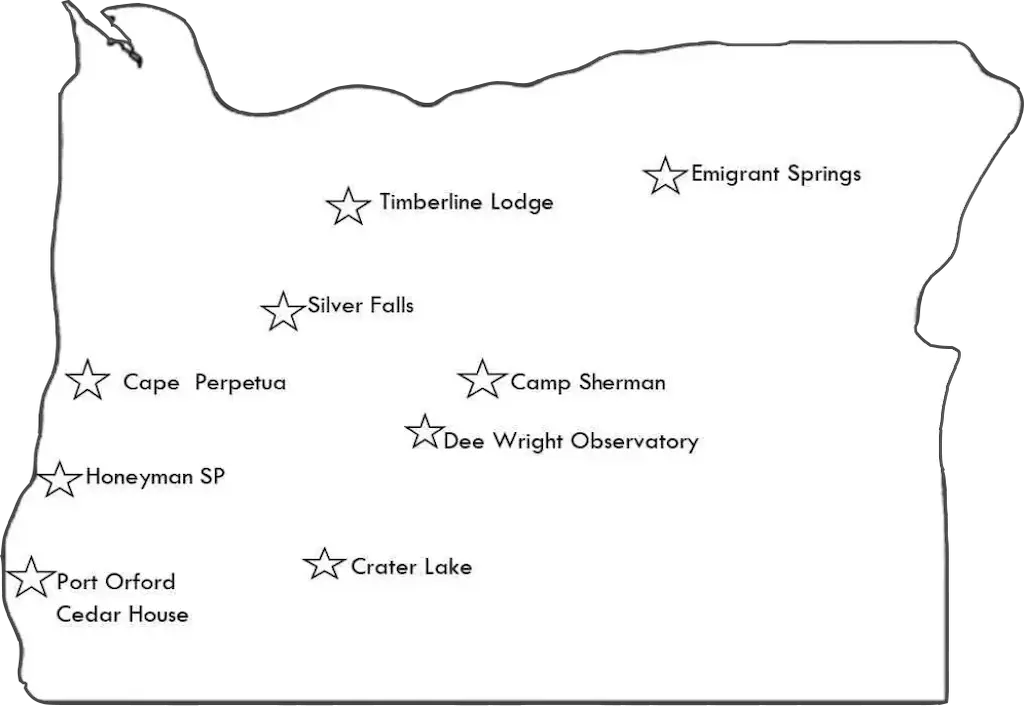
The legacy of the CCC:
Approximately 3 million men benefited from the CCC program. They were given jobs, training, education, good food and health care, an ability to provide for their families, and of course, the satisfaction of building something that lasts and that will continue to impact generations to come! The craftsmanship of the stone and log buildings across the nation pays tribute to what this program accomplished for both conservation efforts and investing in the young men of this country.
The CCC had dozens of camps throughout Oregon. Some left beautiful buildings, while others were mainly forest service camps. Silver Falls was the last camp to close in Oregon, and it only did so because World War II needed the enrollees.
CCC at the Park:
Also, in 1933, Silver Creek Falls was dedicated as a new State Park. The task to transition from the homesteads of the Silver Falls City era (1880s-1930) to the public lands era was a daunting prospect. Who was better suited to take on this monumental task than the young men of the Civilian Conservation Corps?
On June 1, 1935, CCC SP-9 Company 611 arrived at Silver Creek Falls. Over the next seven years, the boys of the CCC built trails, buildings, bridges, walls, and picnic shelters.
In keeping with the NPS style of the park-building era of the ’30s-’40s, buildings were constructed in the Rustic Adirondack style, which sought to use on-site materials and blend with the environment. Local basalt bedrock and timber from the abundant fir forests are the predominant building materials used to build Silver Falls State Park.
Silver Falls was among the few places to host a veterans’ camp. Unemployed veterans of WW1 challenged the restrictions of only allowing 18-24 year olds, and the rules changed to allow these older men. Eleanor Roosevelt made a valiant attempt to continue the inclusivity movement and allow young women, but alas, the idea was only moderately successful and only on the East Coast. The men snidely referred to these camps as the “She-she-she” camps.
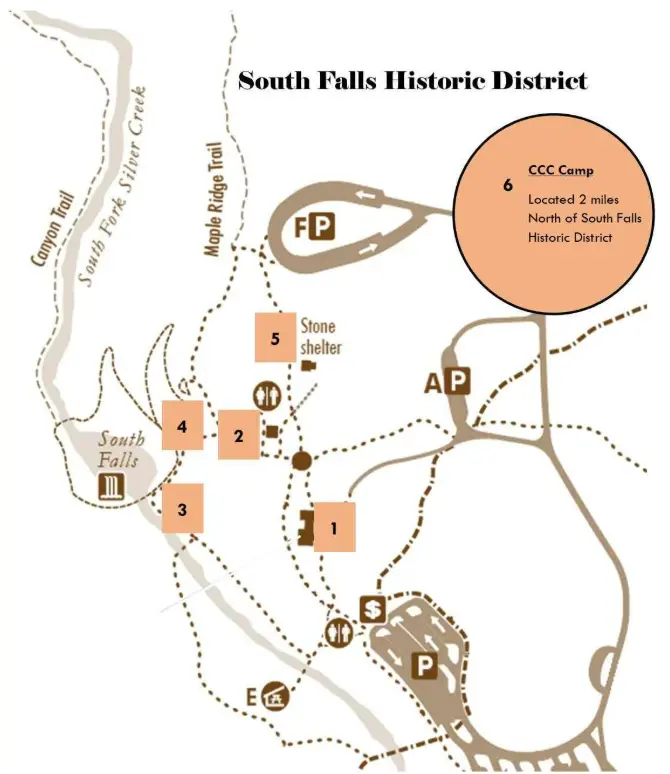
Take the Self-Guided Tour
1. Historic South Falls Lodge (1941)
Completed in 1941, beautiful South Falls Lodge was hand-built in the NPS Rustic Adirondack style with raw materials taken from the park. The Lodge, known as the Concessionaire Building, served as a restaurant from 1946 to the late 1950s when it was closed. It was restored and reopened in 1978.
2. Historic Log Cabin (1935)
Though the original intent was to be a ladies’ powder room, Sam Boardman declared it to be “too fine a structure for such a fate,” and it was designated as the original Lodge. Over the years, the building was used for interpretive events until the Friends of Silver Falls moved the Nature Store in 2009.
3. Stone Wall
The very first structure to be built when the area was designated as a State Park, the stone wall at the top of South Falls provided a measure of safety, though locals were displeased at the intrusion of their traditional access to the waterfall and made their unhappiness known for a solid year.
4. Trail of Ten Falls/Canyon Trail
The CCC constructed this nationally recognized trail using hand tools, muscle, and heart. If you enjoy hiking, waterfalls, and rushing rivers this trail is a great way to spend a few hours in awe.
5. Stone Kitchen Shelter (1938)
Completed in 1938, the unique design provided visitors a picnic shelter with three wood stoves for cooking with heated running water. The locally quarried sandstone stands testimony of the ancient geologic history of the park.
6. North Canyon Day-Use (1935-1942)
The CCC Camp itself was located here. 200 enrollees at a time stayed in barracks, learned construction and forestry skills, made $1 a day, and built one of the best parks in the state of Oregon.
Oddities and Folklore: 1920s-present
Al Faussett: Lived From 1879 to 1948
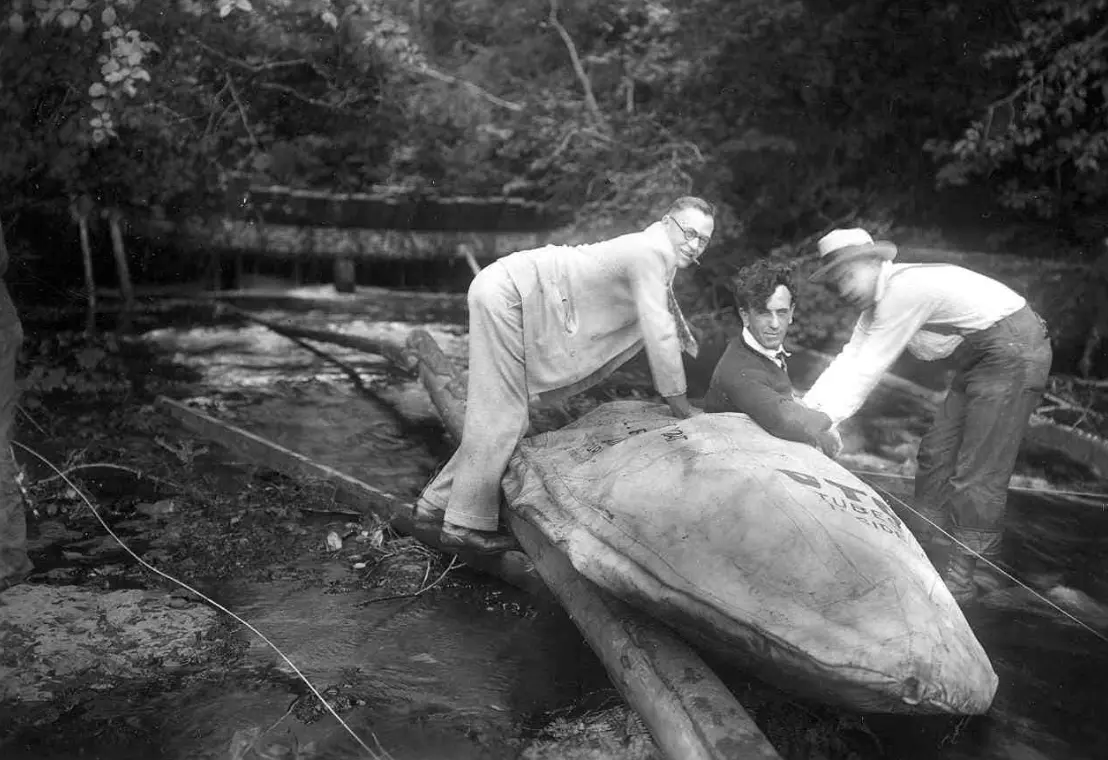
The daredevil and former logger rode a canoe off of South Falls on July 1, 1928. Spectators paid a fee to see the event, which didn't quite go as planned. Al had plunged from numerous waterfalls in Oregon, Washington, and Idaho. His special canoe had a metal ring and piano wire running through, which was set up to control the landing into the pool below South Falls. The ring snagged on a bump, and the canoe (and Al) plummeted to the base of the falls. The crash landing almost killed Al, who spent the next two weeks recovering in the hospital. To add insult to injury, his business partner, who collected the spectator fees, ran off with Al's $3,000. (Nelson, 2013, pp. 115-117)
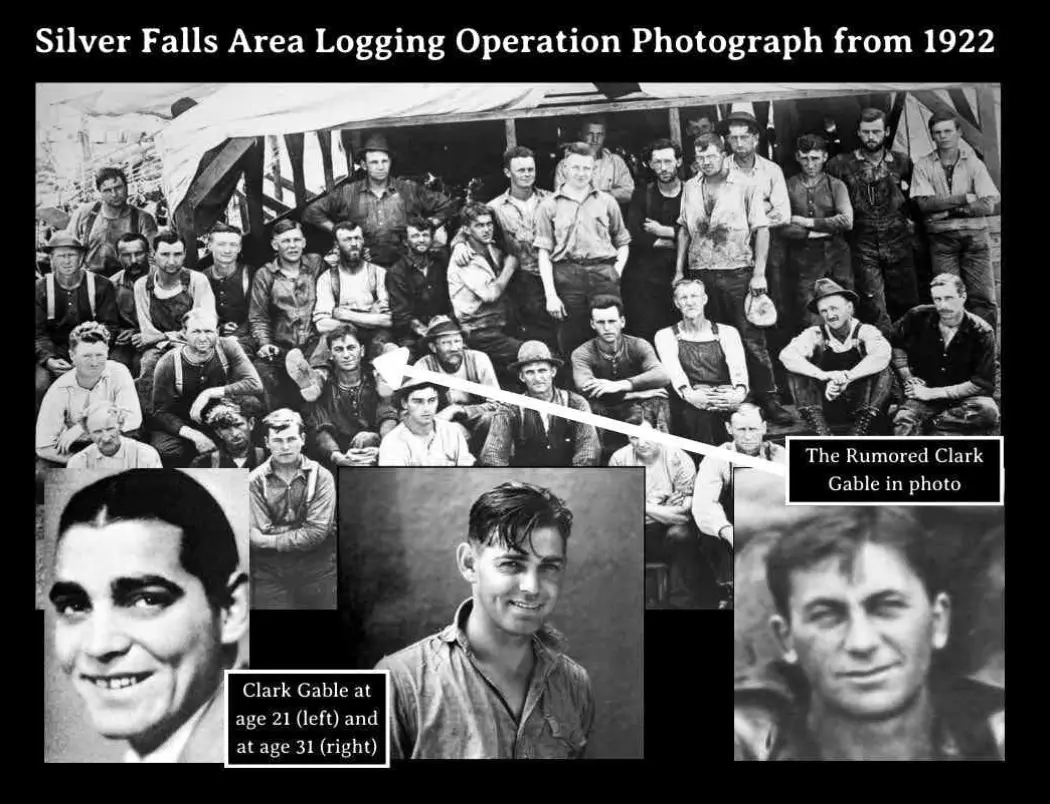
Clark Gable
Rumors of Clark Gable logging at Silver Falls have circulated for years. Gable worked for Silver Falls Timber Company from December 1922 to January 1923. However, there is no evidence that Gable was logging in what's now the state park. He worked in the mill stacking lumber, and his short stint of work there fell outside of logging season. The highly debated legend stems from the photograph, in which a Clark Gable-looking person can be spotted. (Nelson, 2013, pp. 118-120)
Movies Filmed at Silver Falls Include:
- Just Before Dawn (1981)
- The Hunted (2003)
- Twilight (2008)
- A Haunting at Silver Falls (2013)
- Significant Other (2022)